
How Can You Verify the Actual Size and Boundaries of a Plot in Raipur Before Buying?
Buying a residential plot is an important step towards building your dream home. You may have already found a location you like, discussed the price with the seller, and started imagining how your future house will look. But before making a final decision, there is one detail you should never overlook: the actual size and boundaries of the plot.
A plot may be advertised as having a particular area, but do the physical measurements match the documents? Are the boundary markers correctly placed? Does the plot have the dimensions you were promised?
These questions matter because even a small difference in measurements can affect your construction plans, usable space, and understanding of what you are purchasing.
If you are searching for plots in Raipur, verifying the plot’s size and boundaries before buying can help you make a more informed decision and avoid preventable disputes later.
Here is how to approach the process step by step.
Why Is It Important to Verify a Plot’s Size Before Buying?
When you purchase land, you are paying for a specific parcel with defined dimensions and boundaries. If the actual area differs from what you expected, it may affect how you use the land.
For example, imagine that you plan to build a three-bedroom house with parking for two cars. You choose a plot based on its advertised dimensions and ask an architect to prepare a layout.
Later, you discover that the plot is narrower than expected. Your proposed parking arrangement may no longer work, or you may need to change the house design.
Boundary discrepancies can also lead to disagreements with neighbouring landowners, especially when walls, fences, or other structures are involved.
Verifying the plot before paying the full amount or completing the transaction helps you identify potential issues while you still have an opportunity to seek clarification.
1. Check the Plot Dimensions in the Documents
Start by reviewing the documents provided by the seller or developer.
Look for the plot’s stated area, length, width, and other identifying details. Depending on the property and the documents available, these details may appear in the sale deed, allotment documents, approved layout plan, or other relevant records.
Do not focus only on the total area. The dimensions matter too.
For example, two plots may each measure 1,500 square feet, but one may be 30 feet wide and 50 feet long, while another has different dimensions. Their construction possibilities may therefore differ.
Check whether the measurements shown in the relevant documents are consistent with the information provided to you.
If the documents use different measurement units, ask a qualified professional to help you understand the conversion and confirm the figures.
2. Visit the Plot and Identify Its Boundaries
A site visit is an essential part of verifying a plot.
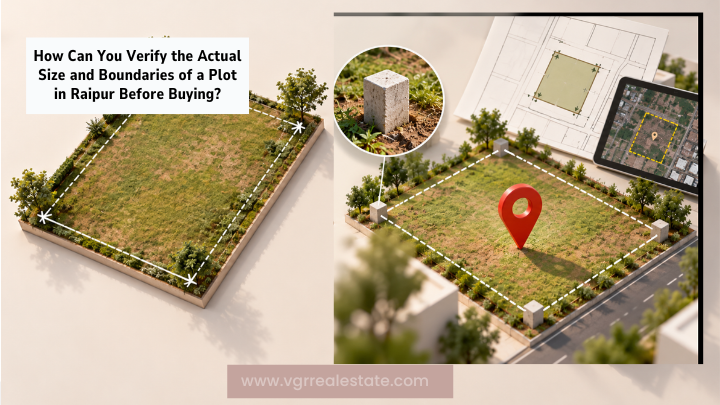
When you visit, look for boundary stones, corner markers, walls, fencing, or other physical indicators that identify the parcel.
Compare these markers with the layout plan and the plot details supplied by the seller.
However, do not assume that a wall or fence automatically represents the legally correct boundary. Physical markers can be misplaced, altered, or installed without an accurate survey.
If the boundaries are unclear, ask the seller to arrange proper identification and measurement before proceeding.
It is also useful to inspect the neighbouring plots. Look for overlapping fences, structures extending into the plot, or other signs that the boundaries may need clarification.
3. Get the Plot Measured by a Qualified Surveyor
One of the most reliable ways to check a plot’s actual dimensions is to arrange a professional land measurement.
A qualified surveyor can measure the parcel and help establish its physical dimensions and area. Where necessary, the survey should be checked against the relevant land records, approved layout, and other applicable documents.
This is particularly important if the plot has an irregular shape, unclear corner markers, disputed boundaries, or measurements that do not appear consistent.
For plots in Raipur, you should also ask the appropriate local land-records or revenue authority about the process for an official demarcation if a formal boundary determination is needed.
A private measurement can be useful, but it should not automatically be treated as a substitute for an official demarcation where one is required.
4. Compare the Physical Measurement With the Approved Layout
If the plot is part of a residential colony or plotted development, ask to review the relevant approved layout plan and the documents identifying your particular plot.
Check whether the plot number, location, dimensions, and surrounding roads correspond to what you see at the site.
For example, if the layout shows a plot measuring 30 feet by 50 feet, its stated rectangular area would be 1,500 square feet. If a physical survey finds different dimensions, ask for the discrepancy to be explained and resolved before completing the purchase.
Also check whether the plot’s position on the ground matches its position in the layout.
Do not rely solely on a brochure, a salesperson’s explanation, or a rough sketch when more authoritative records are available.
5. Understand the Difference Between Plot Area and Usable Construction Space
A plot’s total area is not necessarily the same as the area available for constructing a house.
Building regulations may require setbacks, limit ground coverage, or impose other restrictions. Access, drainage, utilities, and the shape of the plot may also influence the layout.
For example, a plot measuring 1,500 square feet does not automatically allow you to construct a 1,500-square-foot building on the ground floor.
Before purchasing land for a specific house design, ask an architect to review the plot dimensions and the applicable building rules.
This can help you understand whether the plot is suitable for your intended home, parking requirements, and outdoor space.
6. Check for Encroachments and Boundary Disputes
An encroachment occurs when a structure, wall, fence, or other feature extends into land that belongs to someone else, or when someone uses land beyond their lawful boundary.
During your site visit, look for walls that appear to cross boundary lines, neighbouring structures that occupy part of the plot, or unclear access paths.
Ask whether any boundary dispute or encroachment has been reported.
If you notice a possible issue, do not rely only on verbal assurances that it will be resolved later. Ask for the matter to be investigated and documented appropriately.
A qualified surveyor can help establish the physical measurements, while a property lawyer can advise you on the legal implications and the steps required to resolve a dispute.
7. Verify Access Roads and the Plot’s Position
The plot’s boundaries are only one part of the verification process. You should also confirm its location and access.
Check whether the road shown in the layout exists at the site and whether the plot has the access represented in the documents.
If you are purchasing a plot inside a residential development, verify its position in relation to nearby plots, roads, open spaces, and other common areas.
This can help you avoid confusion about which parcel you are buying and whether its access arrangements match what was represented to you.
If a plot is described as a corner plot, road-facing plot, or plot beside an open area, verify that description against the layout and the actual site.
8. Check the Land Records and Seek Legal Advice
Physical measurements alone cannot establish every aspect of ownership.
You should also verify the title, ownership records, applicable approvals, and other documents relevant to the property. The exact checks will depend on the land, the transaction, and the legal status of the development.
Where relevant, ask a property lawyer to review the documents and explain whether there are concerns about ownership, boundaries, access, or the proposed transaction.
If official land records or demarcation are needed, consult the appropriate authority in Chhattisgarh about the applicable process.
This is particularly important when there is a mismatch between the physical site, the approved layout, and the property documents.
9. What Should You Do if the Measurements Do Not Match?
If you discover that the actual measurements differ from the stated dimensions, pause before completing the transaction.
First, ask for the discrepancy to be explained in writing. Then arrange an independent measurement if necessary and compare the findings with the relevant documents.
Depending on the situation, you may need clarification from the seller or developer, a surveyor’s report, updated documentation, official demarcation, or legal advice.
Do not assume that a difference is automatically a sign of fraud. Measurement methods, irregular boundaries, and documentation errors can all require investigation.
However, do not ignore a discrepancy simply because the seller says it is minor.
Resolve the issue and understand its implications before deciding whether to proceed.
10. Use a Simple Checklist Before Buying
Before finalising a plot in Raipur, make sure you have considered the following:
- The plot number and location match the relevant layout.
- The stated area and dimensions are clearly documented.
- Physical boundaries have been identified.
- A professional measurement has been arranged where needed.
- Any difference between the documents and the site has been investigated.
- The relevant ownership and approval documents have been reviewed.
- Access roads and the plot’s position have been checked.
- Construction possibilities have been discussed with an architect.
- Any boundary dispute or suspected encroachment has been addressed.
- You understand the terms of the transaction before making the final payment.
Taking these steps may require some additional time, but it can help you make a better-informed purchase.
Conclusion
Verifying the actual size and boundaries of a plot is an important part of buying land. The advertised area, physical measurements, boundary markers, layout plan, and property documents should all be examined carefully before you commit your money.
If you are considering plots in Raipur, do not rely on the total square footage alone. Check the dimensions, visit the site, arrange professional measurement where appropriate, review the relevant documents, and seek legal guidance if anything remains unclear.
Choosing the right developer is another important part of the process. VGR Real Estate is one option buyers can explore when researching residential plots in Raipur. Before choosing any project, review its available plots, location, layout, relevant documentation, and suitability for your intended home.
A plot may be the starting point of your dream home, but a well-informed purchase starts with knowing exactly what you are buying. Taking the time to verify the land today can help you move forward with greater clarity and confidence.